Last April, I packed my bags and headed to Bergen, Norway, for the 8th International Workshop on Offshore Geologic CO₂ Storage, which is two days of cutting-edge science, lively debate, and one unforgettable site visit. Organised by IEAGHG and the Gulf Coast Carbon Centre (GCCC), hosted by Equinor, and bringing together researchers, engineers, regulators, and industry players from around the world, this workshop is unlike any other event in the CCS calendar. Here’s what I took away.
First Impressions: Bergen Sets the Scene
Bergen is the kind of city that makes you feel like science matters. Surrounded by mountains and fjords, with the UNESCO-listed Bryggen wharf right around the corner from the conference venue, there’s something quietly inspiring about doing climate work here in a country that has been pioneering offshore CO₂ storage since the 1990s. About 3,000 Equinor employees work in the Bergen region alone, and you can feel the energy of a place where decarbonisation isn’t just a talking point, but it’s the day job.
Day 1: A World Tour of CO₂ Storage Projects
The workshop kicked off with an extraordinary international project roundup. In under two hours, we heard updates from CO₂ storage initiatives across the Americas, Europe, and Asia-Pacific, such as from Brazil (Petrobras), the Netherlands (Porthos), Denmark (Greensands and Bifrost), Greece (Prinos), Portugal, South Korea, Japan (Tomakomai), Taiwan, and multiple Australian projects, including CarbonNet and DeepC Store. It was a vivid reminder of just how global this effort has become.
What struck me most was the sheer diversity of geological settings, regulatory frameworks, and project maturity levels represented in that single room. Some projects are still in exploration; others are already injecting. The gap between those stages and what it takes to bridge it ran as a thread through many of the discussions that followed.
The afternoon moved into basin-scale management, one of the more technically complex yet critically important topics in offshore CCS. How do you manage pressure across a shared geological basin when multiple projects are injecting CO₂ into the same formations? Talks from NORCE and Norway’s regulator, SODIR, gave a sobering yet fascinating look at the regulatory and modelling challenges this poses. The session on prospect development rounded out the day, with presentations on legacy well screening, brine management, and aquifer modelling, the nuts and bolts of making a CO₂ storage site work safely over decades.
Presenting My Research: Convective CO₂ Dissolution Under the X-ray Spotlight
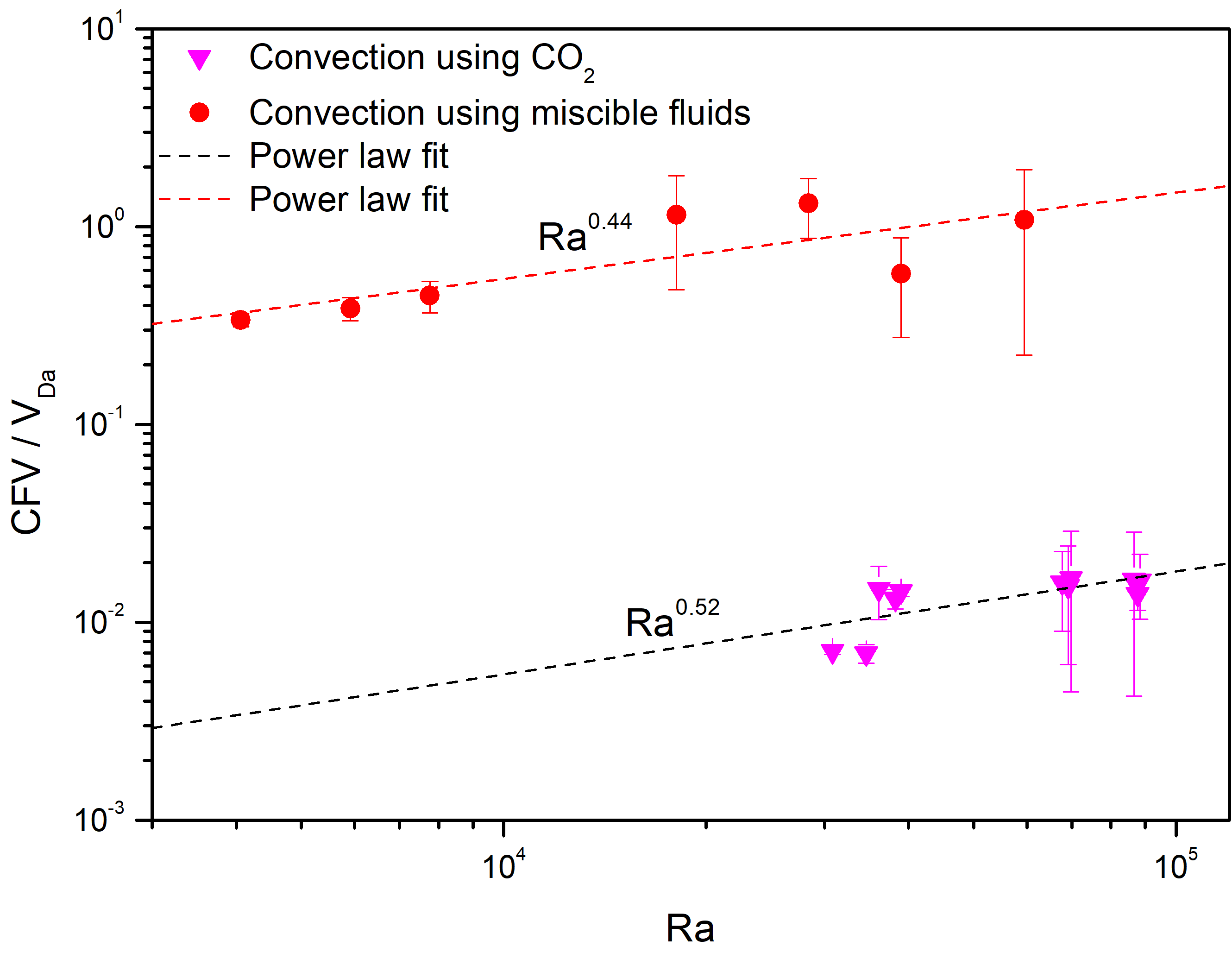
I had the privilege of presenting a poster on our group’s work at the DMEX Centre for X-ray Imaging at the Université de Pau et des Pays de l’Adour. Our research tackles a question that lies at the heart of long-term CO₂ storage safety: once CO₂ is injected underground and begins dissolving into the resident brine, how does it actually move through the rock?
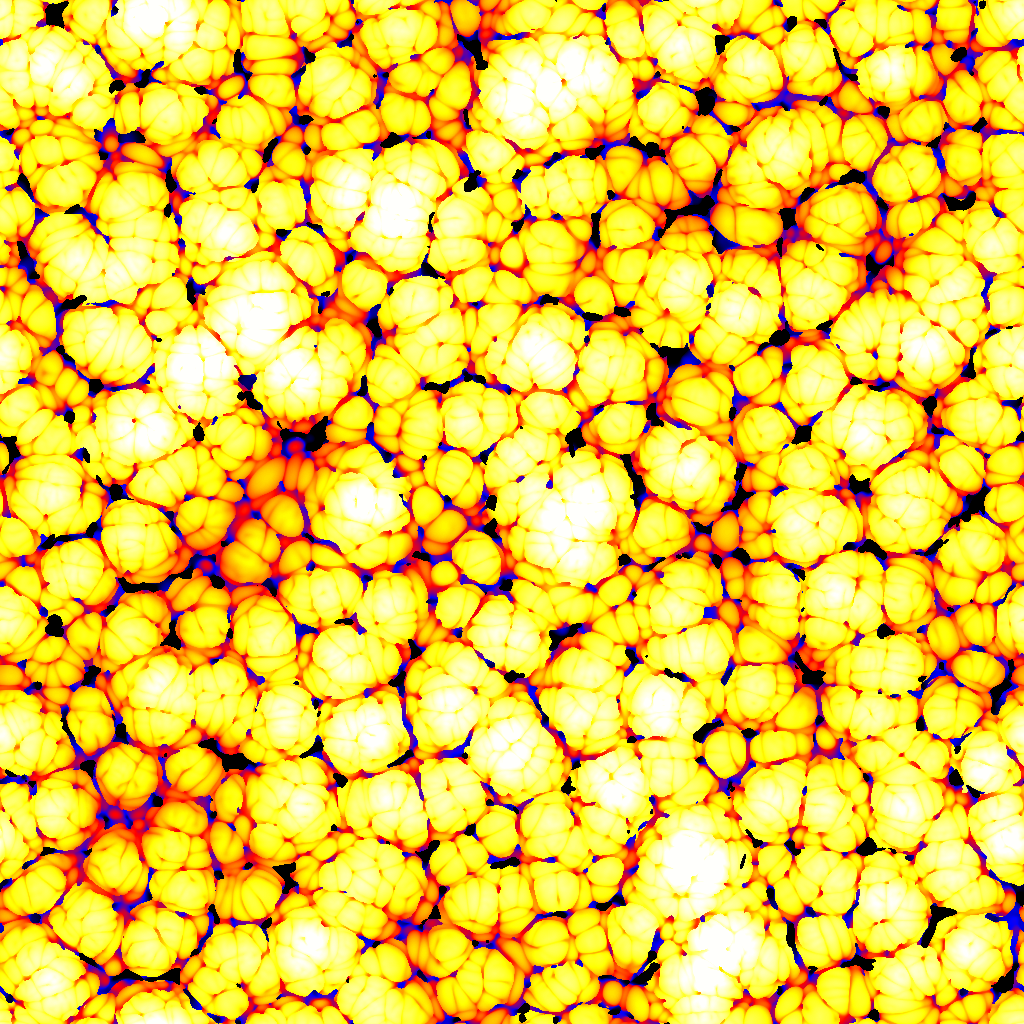
This process, called convective dissolution, is one of the key mechanisms by which CO₂ becomes permanently trapped underground. As CO₂-rich brine is denser than fresh brine, it sinks and drives a circulation that accelerates dissolution. The problem is that this process is extremely difficult to observe directly, especially in 3D, under realistic reservoir conditions.
That’s exactly what we set out to do. Using our purpose-built X-ray tomography setup, we can image convective plumes forming and propagating through actual porous rock cores in real time, at pressures of 40–50 bar. The conversations my poster sparked were genuinely exciting as other researchers were curious about the experimental setup, the image analysis approach, and how our findings might inform reservoir simulations.
Day 2: From Injection Lessons to Monitoring Innovation
Day 2 had a different energy; it was more operational and focused on the current situation on the ground. The injection session opened with lessons learned from four live projects: Northern Lights, Greensands (Denmark), Poseidon (UK), and the Ravenna project in Italy. Each project is at an early stage of injection, and each came with candid reflections on what surprised them, what worked, and what they’re still figuring out.
The monitoring sessions were, for me, one of the highlights of the whole workshop. CCS only works if we can verify that the stored CO₂ stays where we put it, and the scientific creativity behind monitoring right now is remarkable. Talks covered seismic integration, full-waveform inversion at the legendary Sleipner site, fibre-optic sensing (an enLightening story, as the presenter cheekily called it), passive acoustics, and citizen-science approaches. Each session opened up new questions: How do you monitor in a crowded offshore environment where other infrastructure gets in the way? How do you scale monitoring programs as injection ramps up?
The afternoon’s interactive panel on the evolution of monitoring programs from baseline surveys through to full injection brought operators and regulators together in a way that felt genuinely collaborative. Hearing a Norwegian regulator (SODIR) and the UK’s NSTA discuss their approaches side by side was a valuable window into how governance frameworks are converging and where they’re still diverging.
The Northern Lights Site Visit: Seeing CCS in Action
If the two workshop days were the mind, the site visit to the Northern Lights project was the heart.
We departed Bergen at 8am and arrived at the facility, where we were welcomed by the operations team. Northern Lights is the world’s first commercial cross-border CO₂ transport and storage service receiving CO₂ captured from industrial sources across Northern Europe, shipping it by tanker to Norway, and injecting it into a geological formation 2,600 metres beneath the North Sea seabed. The group from a previous workshop had visited the site back in 2020, before construction began. Seeing it now operational, with ships docking and CO₂ flowing, was extraordinary.
We heard from the operations manager about the journey from concept to reality, the logistics of managing a fleet of ships, and what the early injection period has taught the team. The mayor of Øygarden municipality also spoke about what it means for a coastal community to have this new industry take root, a reminder that the social and economic dimensions of CCS are as real as the geological ones.
The site itself is striking: a compact, purpose-built facility perched on the Norwegian coastline, with the North Sea stretching out beyond it. Standing there, it’s hard not to feel the weight of what’s been achieved and the scale of what still needs to happen for CCS to make a meaningful dent in global emissions.
Final Thoughts
What I carry away from Bergen is something beyond the specific technical content, though there was plenty of that. It is a renewed sense that the offshore CCS community is moving from proof of concept to operational reality, and doing so with rigour, transparency, and an appetite for honest conversation about what’s hard.
For a researcher working on the fundamental science of CO₂ storage, trying to understand what happens at the pore scale when CO₂ meets brine meets rock, workshops like this are invaluable. They connect the microscopic to the global, the laboratory to the seabed, the equation to the tank. And they remind you that the work is urgent, the stakes are real, and the community doing it is genuinely excellent.
Until the 9th edition, wherever it may be held.
The research presented in my poster was carried out with support from the EU (grant agreement No. 850853), the E2S UPPA Hub Newpores, the CO2ES industrial chair, the EquipEX IMAGINE², and the ISIFoR project BESCO.