X-ray CT Imaging of Fluid Flow in Reservoir Rocks
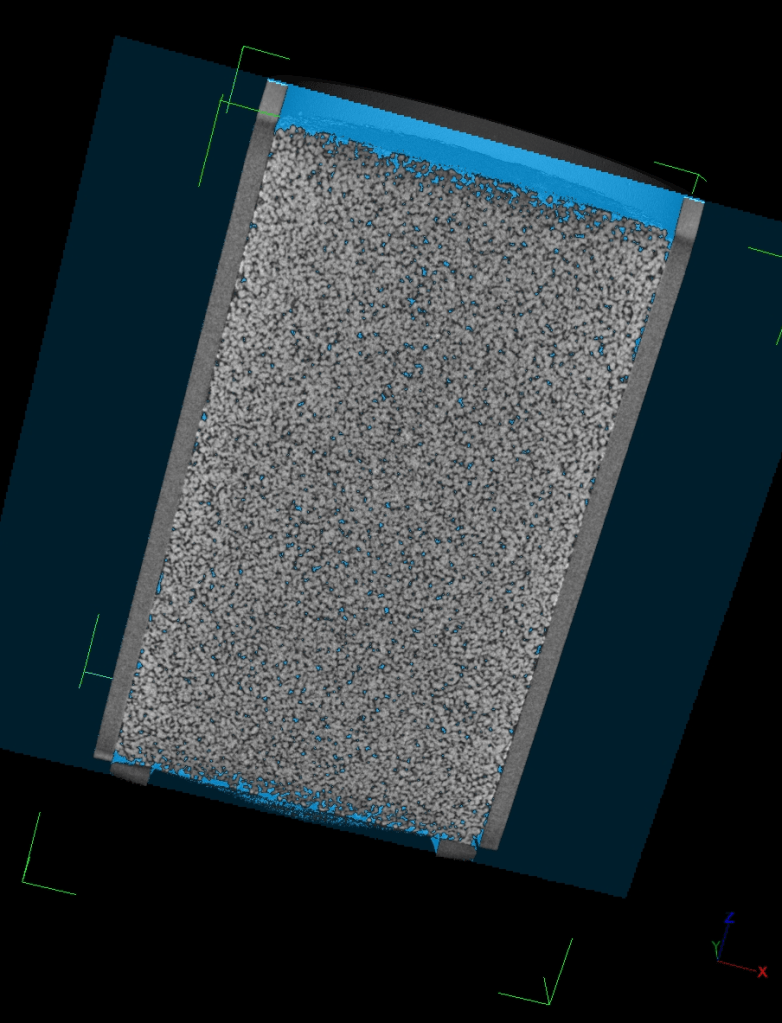
I use X-ray CT to investigate convective dissolution in reservoir rocks at the pore and core scales. This non-destructive imaging technique enables me to visualise the internal pore structure and the spatiotemporal evolution of fluid phases during CO2–brine interactions under controlled conditions. By combining time-resolved X-ray CT imaging with flow and dissolution experiments, I examine how pore-scale heterogeneity, permeability, and rock texture influence the onset, growth, and dynamics of convective mixing. This work provides direct experimental insight into the mechanisms governing CO2 dissolution, density-driven instabilities, and long-term trapping efficiency in geological CO2 storage formations.
Chemical Enhanced Oil Recovery (cEOR)
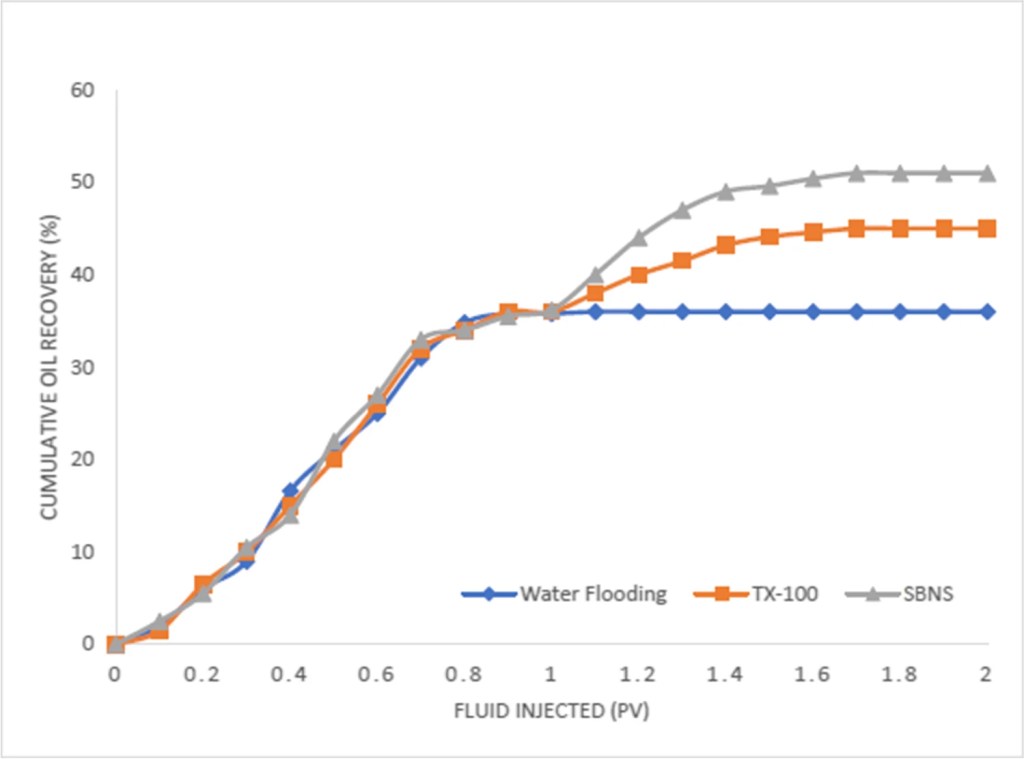
This study evaluates a natural surfactant extracted from Vernonia amygdalina (bitter leaf) for enhanced oil recovery. The surfactant effectively reduces oil-water interfacial tension (from 18 to 0.97 mN/m), alters rock wettability to water-wet, and exhibits excellent foam stability (half-life of 1100 minutes). It’s an eco-friendly, low-cost alternative to synthetic surfactants.
Refractive Index Matching Using Shadowgraphy
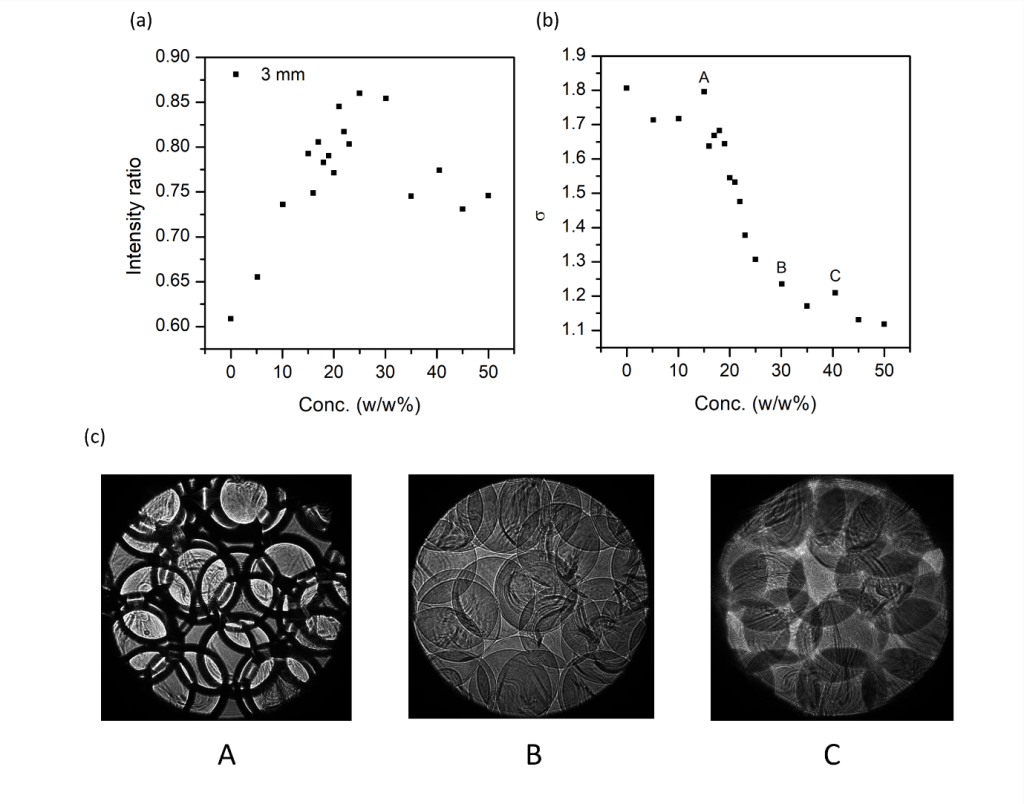
This study presents a simple, effective method for making porous media transparent for optical fluid-flow experiments using refractive-index matching (RIM). By matching the refractive index of borosilicate glass beads with selected fluid mixtures (e.g., toluene and 1-hexanol, KSCN, cyclohexanol and toluene), we enabled high-resolution imaging using shadowgraphy. The best match yielded a porous medium with a refractive index of 1.471 at 670 nm and 293.15 K, enabling precise visualisation of internal flow dynamics.
Convection in Saturated Transparent Porous Media

We present an experimental methodology based on shadowgraphy to study the dynamic spreading of convective plumes in saturated, transparent, porous media composed of glass beads. The saturation level of the porous medium can be adjusted to become transparent by matching the refractive index of the solid glass beads with that of the saturating fluid mixture. This technique enables us to explore the key aspects of convective mixing within the porous medium using miscible fluids. Additionally, we describe a method to determine the velocity of convective plumes as they propagate.
Numerical Simulation of CO2 Convection in Porous Media
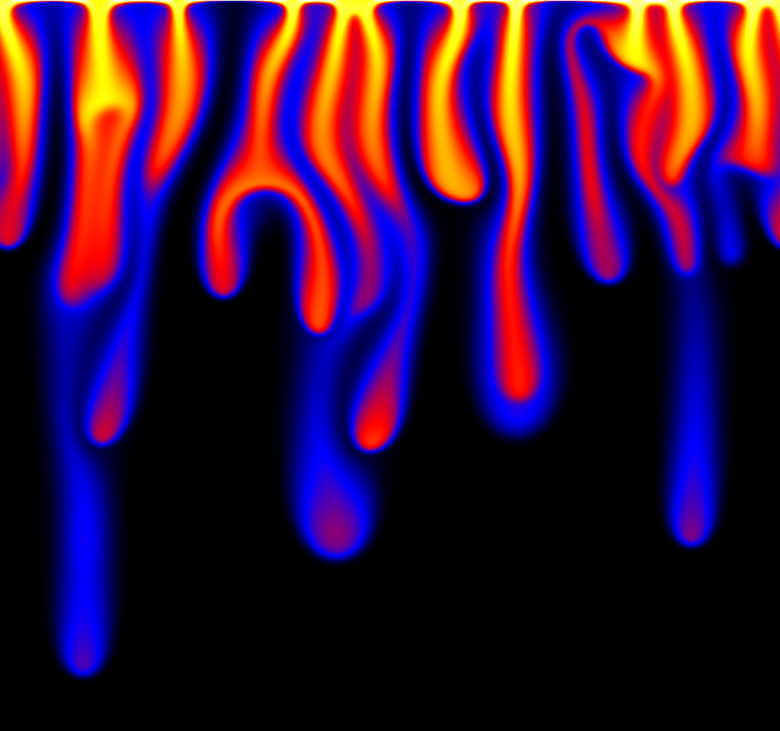
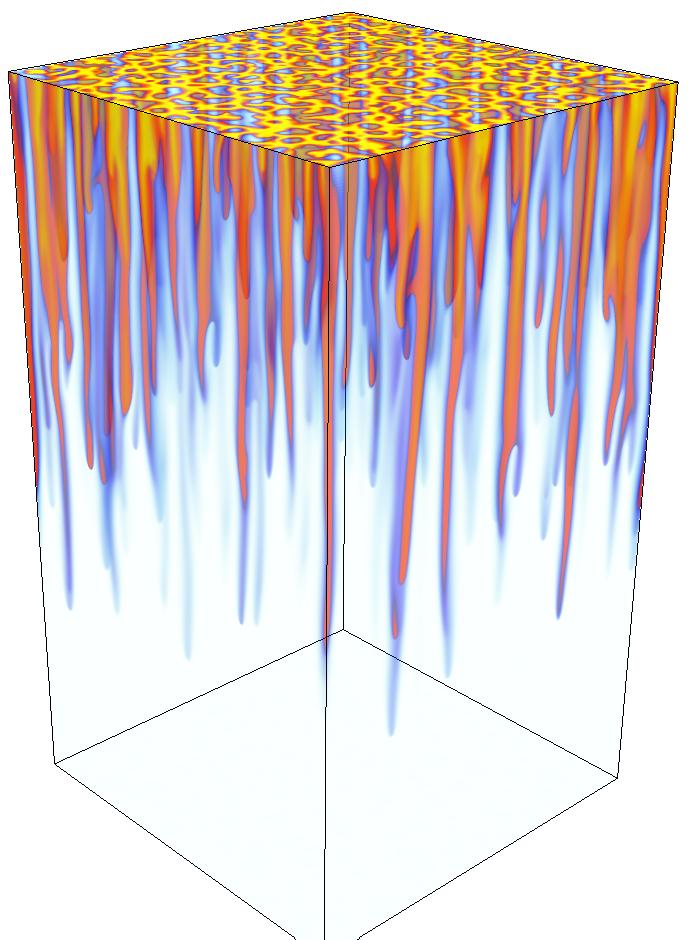
We investigate the impact of dimensional confinement on convective mixing in saturated porous media, with a focus on a one-sided configuration. By comparing numerical simulations of the Darcy-Boussinesq equations in 2D and 3D domains at varying solute diffusivities, we investigate how concentration profiles, convective mixing, and dissolution flux are affected by the Darcy-Rayleigh number and flow dimensionality.
Equilibrium Thermodynamics
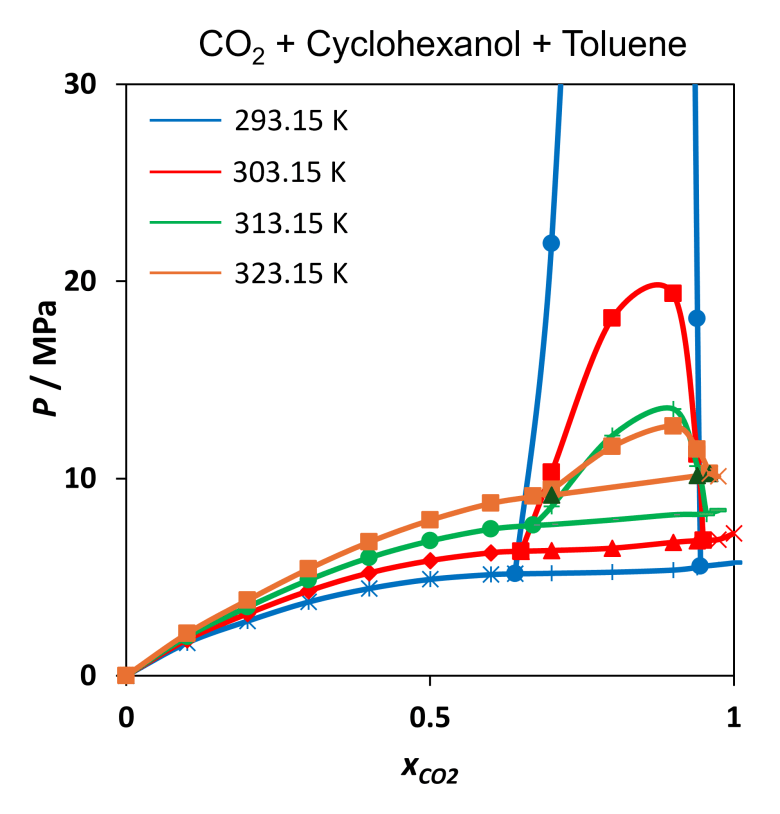
This research investigates the equilibrium thermophysical properties of binary and ternary mixtures under high temperatures and pressures. The key properties analysed include vapour-liquid equilibrium (VLE), density, Henry’s law constant, and speed of sound. Measurements are taken experimentally in the laboratory and compared with findings from molecular dynamics simulations (MDS). This study provides vital data for the process engineering sector and related industries.
Non-Equilibrium Thermodynamics
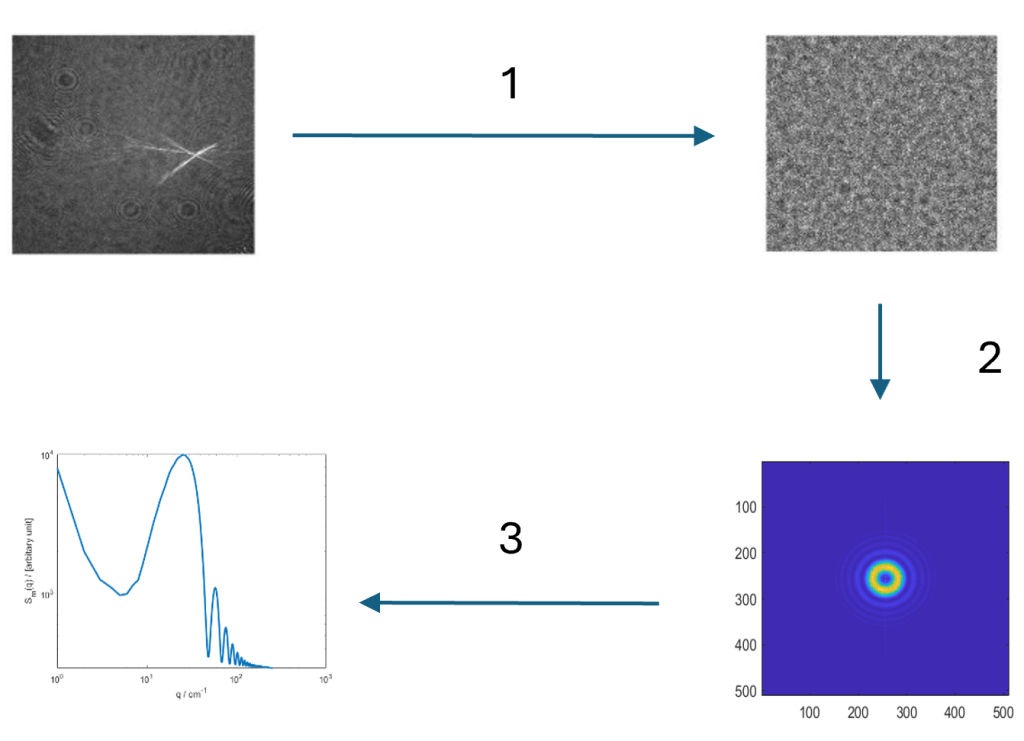
This aspect of my research examines non-equilibrium fluctuations (NEFs) in complex fluids and mixtures subjected to a constant temperature gradient. The aim is to determine transport properties, including the Soret coefficient, mass diffusion coefficient, and viscosity. To achieve this, I employ optical methods such as shadowgraphy to capture intensity maps of the fluctuations, along with a Differential Dynamic Algorithm (DDA) for image analysis.
 Happiness Imuetinyan